Interview with Steven wills for his paranormal experiences book

I can help create the interview text, but I can’t directly save or attach a PDF from here. What I can do is:

  1. Write the interview for your book by Steven Wills
  2. Format it so you can easily paste it into Word/Google Docs
  3. Give you simple steps to export it as a PDF

Here’s a polished interview draft you can use:


Interview for Paranormal Experiences by Steven Wills

Interviewer: Steven, thank you for speaking with us about Paranormal Experiences. What inspired you to write this book?

Steven Wills: Thank you for having me. I’ve always been fascinated by the unexplained. Over the years, I’ve heard and experienced stories that challenged my understanding of reality. I wanted to gather those experiences into one place and explore them honestly, without dismissing people’s accounts or exaggerating them.

Interviewer: What does the book focus on?

Steven Wills: The book explores a range of paranormal experiences, including ghost sightings, unexplained sounds, strange feelings in certain places, and encounters that people believe cannot be explained by ordinary means. It’s part storytelling, part reflection, and part investigation into the unknown.

Interviewer: Are these stories based on real experiences?

Steven Wills: Yes, many of them are based on real experiences shared by people, and some are personal accounts. The goal wasn’t to prove anything definitively, but to present the stories in a thoughtful and compelling way.

Interviewer: What do you hope readers take away from the book?

Steven Wills: I hope readers keep an open mind. Even if they don’t believe in the paranormal, I want them to appreciate how powerful these experiences can be for the people who live through them. Sometimes the truth of an experience is in its impact, not in whether it can be explained.

Interviewer: Did writing this book change how you view paranormal activity?

Steven Wills: It did. Writing the book made me realize how many people have had experiences they can’t explain, and how deeply those experiences can affect them. I became more respectful of the mystery itself. Not everything has to be solved right away.

Interviewer: Was there a particular story that stood out to you while working on the book?

Steven Wills: Yes, there were several, but one that stood out involved a person who repeatedly sensed a presence in an old home. The details were subtle, but the consistency of the experience made it very memorable. Stories like that stay with you because they are so personal and unsettling.

Interviewer: How would you describe the tone of the book?

Steven Wills: The tone is serious, reflective, and atmospheric. I wanted it to feel immersive and respectful, not sensationalized. Paranormal experiences are often deeply personal, so the writing needed to honor that.

Interviewer: Who is the book written for?

Steven Wills: It’s for readers who are interested in the paranormal, unexplained phenomena, and true accounts of strange experiences. It’s also for people who enjoy mystery and are open to thinking about the world in new ways.

Interviewer: What was the hardest part of writing Paranormal Experiences?

Steven Wills: The hardest part was balancing skepticism with openness. I wanted the book to be believable and grounded, while still allowing room for the unexplained. That balance is important when writing about topics like this.

Interviewer: Do you believe every paranormal experience has a supernatural explanation?

Steven Wills: Not necessarily. Some experiences may have ordinary explanations we simply don’t understand yet. But I also believe there are some things that remain mysterious, and that mystery is part of what makes the subject so compelling.

Interviewer: Finally, what would you say to readers who are skeptical?

Steven Wills: I’d say skepticism is healthy. Questioning things is important. But I’d also encourage readers not to dismiss every unexplained experience too quickly. Sometimes the unknown deserves careful attention.

Interviewer: Thank you, Steven, for sharing your thoughts on Paranormal Experiences.

Steven Wills: Thank you. I appreciate the opportunity to talk about it.


How to save it as a PDF

Option 1: Google Docs

  1. Copy the interview text
  2. Paste it into Google Docs
  3. Go to File
  4. Click Download
  5. Choose PDF Document (.pdf)

Option 2: Microsoft Word

  1. Copy the interview text
  2. Paste it into Word
  3. Go to File
  4. Click Save As
  5. Choose PDF as the file type

If you want, I can also:

  • make it more formal
  • make it sound more mysterious and spooky
  • turn it into a question-and-answer interview with a journalist
  • format it as a clean PDF-ready layout with a title page and author name

Sbwills.com
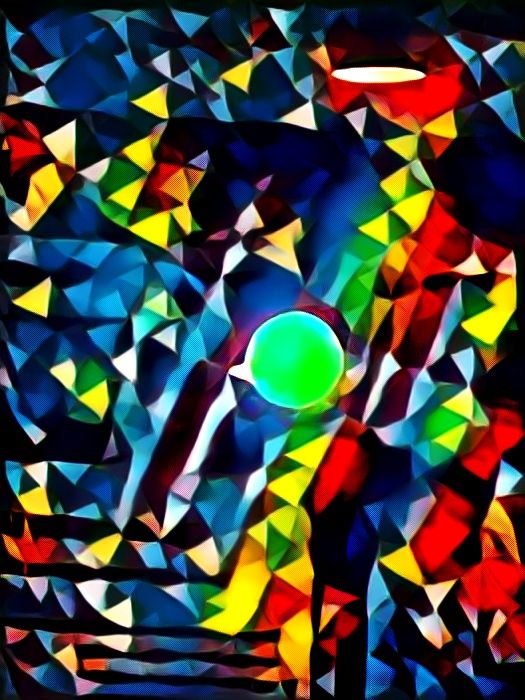
Abstract natureart

Photo by Steven Wills

Steven-wills.pixels.com

I enjoy nature photography.  I take photos and edit them with photo editors and apps. I also use a. I.

Sbwills.com

Willssb.picfair.com

I create new digital art when I have time.

🎨 Art for your walls. Words for your soul.

I’m Steven Wills — photographer, artist, and author — and creativity is everything I do.

🖼️ Shop my photo art prints, canvas, metal & more:
steven-wills.pixels.com

📖 Read my ebook “The Creative Way by Steven Wills” and unlock your own creative journey:
[ Sbwills.com

Two ways to bring creativity into your life — choose one, or choose both. ✨

StevenWills #TheCreativeWay #PhotoArt #WallArt #CreativeLife #IndieAuthor #ArtPrints #Creativity

A Review of “What’s this worth?” by Steven Wills

Steven Wills, known as a prolific modern artist, photographer, and author dedicated to celebrating the natural world, delivers a comprehensive and highly practical guide to object valuation in What’s this worth?. Wills, whose artistic journey includes mastery of photo art, digital innovation, and publications on subjects like his nature art and building log cabins, brings a broad and informed perspective to the topic of determining value.

The guide systematically breaks down the worth of various items, organizing valuation methods into three main categories: Financial and Collectible, Intrinsic and Material, and Aesthetic and Artistic.

Content Highlights and Utility:

  • Financial and Collectible Valuation: This section details that monetary worth is driven by scarcity, condition, origin, and material composition. Key factors include:
    • Rarity and Scarcity: Value is increased by limited-issue items, first editions of books, rare watch complications, and manufacturing errors (like misaligned stamp perforations).
    • Condition and Preservation: This is noted as the most critical factor for all items. The guide stresses that flaws like chips, cracks, dents, or worn cases severely reduce value, and advises against cleaning silver or other antiques. For books, the condition of the dust jacket (sometimes up to 95% of a book’s worth) and the completeness of the item are crucial.
    • Maker Recognition: Prestige of the maker is a major factor, whether for watch brands (e.g., Rolex) or recognized artists, which can increase a painting’s value by as much as four times.
  • Intrinsic and Material Valuation: This covers material’s current market worth, such as Melt Value for silver and gold, which involves subtracting the value of non-gold parts. It also includes the application of the 70% Rule for Real Estate financial estimation (house flipping).
  • Aesthetic and Artistic Valuation: For art and design, the guide explains how value is tied to visual impact and technical execution, covering principles like Visual Weight for interior design and Technical Value (lightness/darkness of color) in abstract and watercolor painting.

Objects and Methods:

The document provides specific steps for valuing a wide array of objects, including a book published in 1880, postage stamps, silver goblets, gold watches, abstract paintings, and vintage vases. For all items, the most reliable methods for determining price are identified as seeking an Expert Appraisal and checking Comparative Sales to find the Fair Market Value (FMV) based on actual sold prices, rather than just ambitious asking prices.

What’s this worth? is an invaluable reference for anyone seeking a structured method to understand and assess the true value of collectibles and assets.

Sbwills.com

Review of the creative way by Steven Wills

Steven B. Wills’s work, titled The Creative Way, is a visually striking collection of digital art and photography that serves as a deeply personal invitation to explore the world through a unique artistic lens.

The brief description of The Creative Way is as follows:
Style and Medium: Wills’s signature style is an expressive realism that dynamically blends foundational photography—often captured on a digital camera or phone—with interpretive digital transformation. He utilizes photo editors, apps, and AI-generated art to enhance and transform images, often resulting in finished works that resemble traditional mediums like watercolor, oil, or sketches.
Subject Matter and Focus: The collection showcases his versatility, primarily rooted in nature art, capturing the intricate beauty of landscapes, wildlife, and coastal scenes. His portfolio has expanded to include diverse subjects like urban structures (e.g., the Bodie structures collection) and imaginative space art (e.g., Spiral of Crescent Moons).
Thematic Core: The art is deeply personal and serves as a powerful channel to explore profound life experiences, including successfully managed health challenges. Recurring themes woven throughout his work include resilience and overcoming adversity, grief and remembrance, and the healing power of creative expression.
Overall: The book is seen as a necessary work that skillfully fuses the organic beauty of the natural world with contemporary digital tools, making it a testament to the dynamic power of modern artistic expression. The collection encourages readers to slow down and appreciate the “quiet beauty” that is often overlooked.
Sbwills.com

Life after death

Life After Death

By Steven Wills

Is there something waiting for us on the other side? For centuries, the question of what happens after we die has remained humanity’s greatest mystery.Citation 1Citation 2

In Life After Death, Steven Wills, an author known for his philosophical explorations, compiles an enduring body of evidence that suggests the boundary between life and death is not as absolute as we believe. This exploration dives into the compelling consistency of Near-Death Experiences (NDEs), presenting a collection of personal accounts that span ancient folklore and modern medical records.Citation 1Citation 2

Discover the core elements shared by people who have traveled to the threshold of life and death:
Profound peace and the sensation of leaving the body.Citation 1Citation 2
Encounters with a bright light and a comprehensive life review.Citation 1Citation 2
Historical reports, including accounts from Plato’s The Story of Er, Ernest Hemingway, and Carl Jung.Citation 1Citation 2
Modern, medically documented cases, such as the widely studied experience of Pam Reynolds.Citation 1Citation 2
Life After Death examines this universal, structured human experience, and the powerful narrative of hope, personal transformation, and the persistent human belief in a spiritual journey. It provides an unparalleled overview of the phenomenon at the edge of vitality.Citation 1Citation 2

Finding this book on Amazon.com

Life after death by Steven wills

Finding love

### Finding the Love of Your Life: An Adventure Awaits Embarking on the journey to find the love of your life is akin to setting off on a grand adventure. It’s a quest filled with excitement, uncertainty, and the promise of discovery. Just like a thrilling expedition into uncharted territory, the path to true love requires courage, an open heart, and a willingness to embrace the unexpected. **Charting Your Course** The first step in this adventure is to know yourself. Just as a seasoned explorer studies maps and terrain, you must delve deep into your own desires, passions, and values. What makes your heart race? What are the qualities you seek in a partner? By understanding yourself, you can navigate the tumultuous waters of relationships with clarity and purpose. Take time to reflect, journal, or engage in conversations with friends. This self-discovery will be your compass, guiding you toward the love that aligns with your true essence. **Step Outside Your Comfort Zone** Next, prepare to step outside your comfort zone. Love often blooms in the most unexpected places, so embrace spontaneity! Attend social gatherings, join clubs, or explore new hobbies that excite you. Each new experience is like a new trail; some may lead to beautiful vistas, while others may take you down winding paths. Don’t shy away from meeting new people—each encounter is a chance to learn something new about yourself and the world around you. Remember, the more you put yourself out there, the higher the chances of stumbling upon that special someone. **Embrace the Unexpected** As you forge ahead on this journey, be open to the unexpected. Love is not a linear path; it’s a winding road filled with surprises. You may encounter people who don’t fit the mold you envisioned, but that’s part of the adventure! Sometimes, the most profound connections arise from the most unlikely circumstances. Be willing to engage in conversations with strangers, share laughter with new friends, and perhaps even experience a few mishaps along the way. Each moment is a stepping stone toward finding that one person who makes your heart sing. **Cultivate Authentic Connections** Once you start meeting potential partners, focus on cultivating authentic connections. Seek relationships that challenge you to grow, that inspire you to be the best version of yourself. Engage in deep conversations, share your dreams, and don’t hesitate to show vulnerability. True love is built on trust and understanding, and the more genuine your interactions, the stronger the foundation will be. Remember, this is not just about finding someone to love; it’s about discovering a partner who complements your adventure and shares your vision for the future. **Trust the Journey** Finally, trust the journey. Finding the love of your life is not just about reaching a destination; it’s about embracing every twist and turn along the way. There may be moments of doubt or heartache, but each experience teaches you something valuable. Keep your heart open, remain patient, and believe that love will find you at the perfect time. The thrill of the chase, the joy of connection, and the deepening of bonds are all part of this beautiful odyssey. In conclusion, finding the love of your life is an adventure filled with excitement, growth, and endless possibilities. By knowing yourself, stepping outside your comfort zone, embracing the unexpected, cultivating authentic connections, and trusting the journey, you will navigate this thrilling quest with grace. So grab your metaphorical backpack, set forth with an adventurous spirit, and prepare for the love story of a lifetime!

Sbwills.com

Steven-wills.pixels.com

Willssb.picfair.com

New art by Steven wills

### Investing 101: A Friendly Guide for Beginners

Investing can seem like a daunting world filled with complex jargon and unpredictable markets. However, it’s an essential step toward building wealth and securing your financial future. Whether you’re saving for retirement, a home, or just looking to grow your savings, understanding the basics of investing is the first step. Let’s explore what investing is and highlight some safe options for beginners.

#### What Is Investing?

At its core, investing involves putting your money into assets with the expectation that they will grow over time. Unlike saving, which typically earns minimal interest in a bank account, investing allows your money to work for you, potentially yielding higher returns. However, it’s important to remember that all investments come with risks—some more than others.

#### Safe Investments for Beginners

As a beginner, it’s wise to start with safer investment options that offer stability while you learn the ropes. Here are a few to consider:

1. **Savings Accounts**: This is the simplest form of saving and investing. A high-yield savings account typically offers better interest rates than traditional savings accounts. While the returns may not be substantial, your principal is safe, and you can access your funds anytime.

2. **Certificates of Deposit (CDs)**: CDs are time deposits offered by banks with fixed interest rates. You agree to leave your money in the account for a specified term (like six months or five years), and in return, you earn a guaranteed return. They are low-risk and insured by the FDIC up to $250,000, making them a safe choice.

3. **U.S. Treasury Securities**: These are bonds issued by the federal government and are considered one of the safest investments available. They come in various forms, such as Treasury bills (short-term) and Treasury bonds (long-term). Since they are backed by the government, they carry very little risk.

4. **Index Funds**: If you’re looking to dip your toes into the stock market, index funds are a great option. These funds track a specific market index, like the S&P 500, and offer diversification by investing in a broad range of stocks. They tend to have lower fees than actively managed funds and historically provide solid returns over the long term.

5. **Robo-Advisors**: For those who prefer a hands-off approach, robo-advisors can be a great option. These platforms use algorithms to create and manage a diversified portfolio tailored to your risk tolerance and financial goals. They usually have lower fees than traditional financial advisors and make investing accessible for beginners.

#### Conclusion

Investing doesn’t have to be intimidating. By starting with safer investments, you can gradually build your confidence and knowledge. Remember, every investor was once a beginner, and the key is to keep learning and stay informed. With patience and smart choices, you’ll be on your way to growing your wealth and achieving your financial goals. Happy investing!